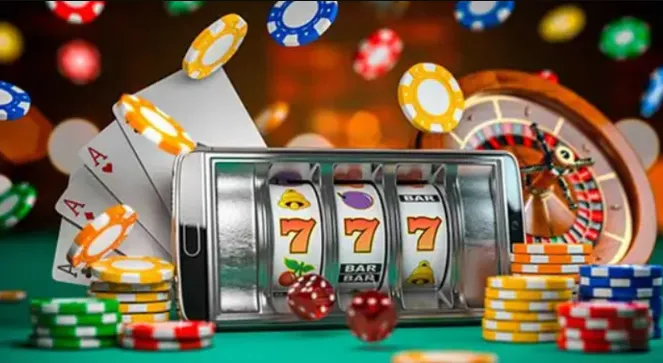
In the digital and physical realms of chance, a ghost haunts the aisles of online casinos and the vibrant, noisy floors of gaming halls in Southeast Asia. Its name is “slot gacor.” Unlike the classic Western pursuit of a “loose” or “hot” machine, “gacor” (from the Indonesian term for a bird chirping loudly and often) is more than just superstition—it is a full-fledged cultural narrative, a shared digital folklore that reveals our timeless struggle to find pattern, agency, and community in the face of absolute randomness.
This isn’t just a story about slots. It’s a story about how human meaning-making collides with cold, unfeeling code.
The Unshakeable Truth: The Architecture of Chance
To understand the “gacor” ghost, you must first understand the machine it supposedly possesses. Every regulated digital slot operates on a Random Number Generator (RNG), a complex algorithm that generates thousands of number sequences per second. The moment you press ‘spin,’ the RNG captures a single, random sequence that dictates the outcome. This system is hermetically sealed—it has no memory, no mood, and no capacity for “warming up” or “cooling down.”
The game’s behavior is predetermined by its volatility (the frequency and size of payouts) and its Return to Player (RTP), a long-term statistical average calculated over billions of simulated spins. A machine cannot deviate from its programming based on the time of day, the previous player’s luck, or any incantation, digital or otherwise.
So, if the machine is an impregnable fortress of randomness, why does the “gacor” specter feel so real to millions?
The Birth of a Digital Folklore
The “gacor” phenomenon thrives in the fertile ground where technology meets ancient human psychology.
- The Apophenia Engine: Our brains are pattern-recognition machines, hardwired to find signals in noise. This tendency, called apophenia, leads us to perceive a “streak” in a purely random series of events. Three small wins in ten spins on a particular game feels like a discovered secret—a “pattern” (“pola gacor”)—rather than a probable fluctuation in a random set.
- The Social Layer: “Gacor” is inherently communal. It lives on YouTube livestreams, Telegram groups, and Twitter threads. When a streamer has a winning session, it’s not seen as statistical luck; it’s documented as “proof” of a “gacor” slot. This creates a powerful feedback loop: thousands of viewers, acting on the tip, flood the same game. With such volume, someone in that crowd will inevitably hit a bonus or jackpot. That win is then reported back to the community, cementing the game’s “gacor” status in a self-fulfilling prophecy of collective action, not altered odds.
- The Theater of Reinforcement: Modern game design is a masterclass in behavioral psychology. “Losses disguised as wins” (where you win back less than your bet but are greeted with celebratory sounds and animations) and constant sensory feedback make a machine feel active and “vocal”—literally “gacor.” The machine isn’t paying out more; it’s performing the role of a paying machine with impeccable theater.
The Hunters and The Harvest
A whole ecosystem has evolved around hunting this ghost. “Bocoran gacor” (gacor leaks) are shared like state secrets. Influencers build entire brands on being “gatekeepers” to these mythical machines. This economy is nuanced:
- The Affiliate Veil: Some promoters are financially incentivized via affiliate links to direct traffic to specific games or casinos. The “gacor” tip becomes a marketing tool, wrapped in the authentic language of community insight.
- The Temporal Ritual: Tips often come with specific, ritualistic timing—”this slot is gacor between 10 PM and 2 AM.” This imposes a human schedule on the algorithm, granting players a sense of control. They are not subject to chance; they are clever operatives acting on intelligence.
A New Philosophy of Play
Embracing the reality of the RNG doesn’t have to mean the end of enjoyment. It can be the beginning of a more empowered and clear-eyed approach:
- Shift from Hunting to Curating: Stop searching for haunted machines. Instead, curate your experience based on transparent metrics. Choose games with an RTP and volatility that match your goals for session length and payout style.
- Reframe the “Community”: Enjoy the social aspect—the shared excitement of a stream, the camaraderie in a group—but understand it as a separate layer of entertainment, distinct from the game’s mathematics. The value is in the shared experience, not the shared secret.
- Master Your Own Algorithm: The only system you can truly influence is your own behavior. Implement a strict, personal algorithm for bankroll management: set loss limits, define win goals, and schedule time limits. This is the only reliable strategy that exists.
Conclusion: The Ghost We Created
“Slot gacor” is not a flaw in the machine’s code; it is a feature of our own humanity. It is a cultural ghost—a story we have collectively written onto the blank screen of randomness to make it feel navigable, social, and alive with secret knowledge. The machines are silent, mathematical entities. We are the ones who make them sing, who hear the “gacor” in the chaotic noise, and who build communities around chasing that song.