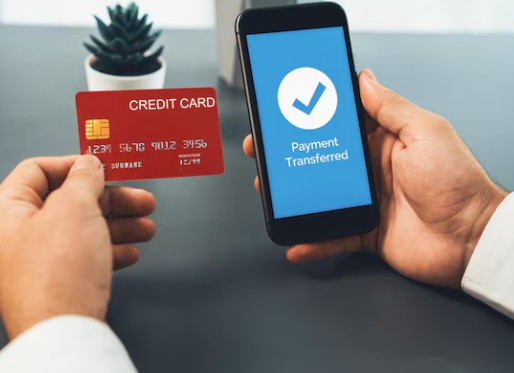
A credit card represents access to a credit line, but the credit line is not the same as usable cash. Most card transactions involve giving the merchant the credit and receiving goods or services in return; no cash is involved. For situations where the household needs actual usable funds rather than merchant purchases, the credit line has to be converted through one of several mechanisms.
The mechanisms have different practical mechanics, different costs, and different appropriate use cases. A cardholder who understands them can choose the right one for each situation. A cardholder who treats them as interchangeable usually picks based on familiarity, which often produces the most expensive option.
Mechanism One: ATM Cash Withdrawal
The most direct mechanism is using the card at an ATM to withdraw cash. The cardholder inserts the card, enters a PIN, and receives cash. The transaction is classified as a cash advance, with all the cash advance cost mechanics applied.
The practical steps are straightforward. The cardholder needs to know the card’s PIN, which is sometimes set at activation and sometimes requires a separate process. The cardholder approaches an ATM that accepts the card’s network, follows the standard withdrawal flow, and receives cash within a few seconds.
The strengths of this mechanism are speed and certainty. The cash is in hand immediately. No third party is involved. The cost structure is known in advance. The transaction either completes cleanly or fails cleanly. The risk profile is predictable.
The weaknesses are cost and the immediate fee. The cash advance fee applies at the moment of withdrawal. The cash advance APR is higher than the purchase APR. Interest accrues immediately with no grace period. For small short-term needs, the cost can be tolerable. For larger needs or longer windows, the cost accumulates quickly.
Mechanism Two: Card-to-Bank Transfer
Some card issuers offer a transfer feature that moves credit line capacity to a linked bank account. The cardholder uses the issuer’s online portal or app to initiate a transfer, specifies the destination account, and receives the funds within hours to a few business days.
The practical steps require having a linked bank account set up in advance with the issuer. The link is usually established when the card is opened or can be added later through the portal. Once the link exists, the transfer is initiated through the portal interface.
The strengths are convenience and the absence of physical cash handling. The cardholder does not need to visit an ATM. The funds appear in a familiar account that the cardholder controls.
The weaknesses are the same as ATM cash advances: the cash advance fee, the higher APR, and the immediate interest accrual all apply. Some issuers offer promotional transfer rates for new accounts or during specific periods, which can temporarily reduce the cost, but the structure is otherwise similar.
Mechanism Three: Convenience Check
A convenience check is a paper check drawn against the credit line. The issuer sends checks to the cardholder, sometimes proactively as part of marketing campaigns. The cardholder writes the check to a third party — a vendor, a creditor, an individual — and the recipient deposits it like any other check.
The practical steps involve writing the check to the desired recipient and ensuring they actually deposit it. The cardholder’s credit card balance increases by the check amount when the check clears.
The strengths are flexibility (the check can go to anyone, including parties that do not accept credit card payments) and the occasional promotional rate that some convenience checks come with. The weaknesses are the typical cash advance cost structure (unless the promotional rate genuinely applies) and the risks associated with paper checks — loss, theft, fraud, or simply forgetting that the check was written.
Mechanism Four: Balance Transfer
A balance transfer moves an existing debt balance from another card or loan onto the cardholder’s card. The transfer is not directly a cash conversion, but it can free up cash flow by replacing higher-interest debt with lower-interest debt.
The practical steps involve initiating the transfer through the receiving card’s portal or by phone, specifying the source account and the amount to transfer, and waiting for the transfer to complete. The transferred balance appears on the receiving card, usually within a week.
The strengths are the promotional rates that balance transfers often qualify for, sometimes zero percent for an introductory period. When used effectively, the balance transfer can be the cheapest mechanism in the category. The weaknesses are the transfer fee (usually 3-5 percent paid up front), the conditional nature of the promotional rate, and the risk of paying retroactive interest if the balance is not paid off during the promotional window.
Mechanism Five: Third-Party Conversion Services
A fifth mechanism involves third-party services that facilitate converting credit line into cash through various transactional structures. These services exist in a wide range of legitimacy and cost. Some operate within consumer credit norms with transparent terms. Others operate with terms that can be punitive.
The practical steps depend on the specific service. Typically the cardholder applies through the service’s portal, provides identification and the card information, and receives funds through the service’s payment mechanism. The service collects a fee for facilitating the transaction.
The strengths can include faster processing than other mechanisms in some cases, or terms that fit specific situations better than direct card mechanisms. The weaknesses include variable legitimacy across providers, the additional party introduced into the transaction, and the variable cost structure that requires careful evaluation.
For households comparing the practical mechanics across these mechanisms in detail, a Dreamgift 카드깡 style reference that walks through the steps, costs, and considerations for each mechanism can support the comparison. The framework matters because the differences between mechanisms are sometimes subtle and consistently important.
Choosing the Right Mechanism
The right mechanism depends on the specific situation. For genuinely urgent small needs, the ATM cash advance is often the best fit despite its cost, because the speed advantage matters more than the cost in those scenarios.
For moderate needs with some lead time, the card-to-bank transfer or a personal line of credit usually produces better total cost than the ATM advance, with only modestly slower processing.
For known balances that can be paid off within a defined window, the balance transfer is usually the cheapest option, with the caveat that the discipline to pay off within the window is essential.
For unusual situations that the standard mechanisms do not cover well, third-party services can sometimes offer terms that fit better, but only after careful vetting of the specific provider.
The Pattern That Pays Off
The cardholder who understands all five mechanisms can match the mechanism to the situation rather than defaulting to whichever is most familiar. The matching produces better outcomes consistently.
The cost difference between matched and default selection can be substantial. A household that uses card credit for cash needs even occasionally — three or four times per year — saves meaningful amounts by routing each instance to the right mechanism rather than defaulting to whichever is easiest to reach.
The understanding takes a small upfront investment in learning the mechanisms and pays back across every subsequent credit-to-cash decision the cardholder will ever face. The investment is favorable, and most cardholders under-allocate effort to this kind of learning relative to the value it produces.